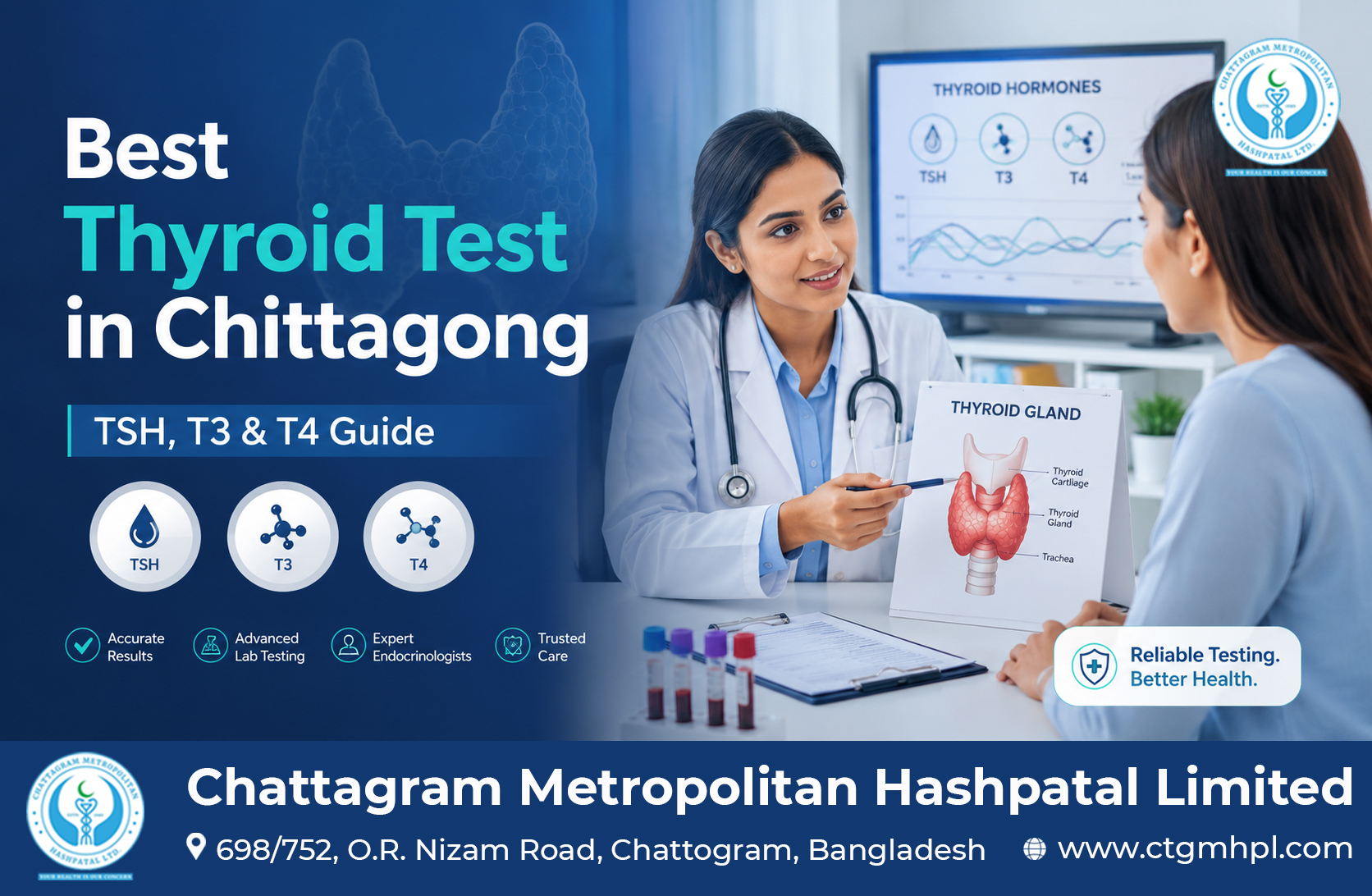
Best Thyroid Test in Chittagong
Thyroid problems can develop quietly. A person may experience tiredness, weight changes, irregular periods, hair loss, anxiety, constipation, or a faster heartbeat without knowing the reason. Because these symptoms can also occur with many other conditions, a blood test is usually needed to check whether the thyroid gland is working properly.
People searching for the best thyroid test in Chittagong should not choose a test solely based on price. The right test depends on symptoms, medical history, current medications, pregnancy status, and prior thyroid test results. A dependable diagnostic center should also offer accurate testing, clear reports, qualified laboratory professionals, and access to an experienced doctor.
For patients looking for reliable diagnostic support, Chattagram Metropolitan Hospital provides access to thyroid-related testing and specialist care in Chittagong. Patients can contact the hospital to confirm available thyroid tests, doctor schedules, report delivery times, and current charges.
What Is a Thyroid Test?
The thyroid is a small, butterfly-shaped gland located at the front of the neck. It produces hormones that influence energy use, heart rate, digestion, body temperature, weight, mood, and several other important functions. Thyroid disease may cause the gland to produce too much or too little hormone.
A thyroid test usually refers to a blood test that measures thyroid hormone levels. The most common tests are:
- Thyroid-stimulating hormone or TSH
- Free thyroxine or FT4
- Free triiodothyronine or FT3
- Anti-thyroid peroxidase antibody or Anti-TPO
- Thyroglobulin antibody or TgAb
Not every patient requires all these tests. A doctor may begin with a TSH test and add other tests as needed.
Which Is the Best Thyroid Test?
For most people, TSH is the first thyroid test doctors consider. The pituitary gland produces TSH and signals the thyroid gland how much thyroid hormone to produce. An abnormal TSH result may indicate that the thyroid is underactive or overactive.
TSH alone may be enough for basic screening. However, it does not provide the complete picture in every situation.
TSH Test
The TSH test helps identify possible hypothyroidism or hyperthyroidism. A high TSH level often indicates that the thyroid is not producing enough thyroid hormone. A low TSH level may suggest excessive thyroid hormone production. These patterns are not universal, so results must be interpreted with other findings.
Free T4 Test
FT4 measures the unbound thyroxine available for the body to use. Combining FT4 with TSH often provides a clearer picture of thyroid function than either test alone.
Free T3 Test
FT3 may be requested when a doctor suspects an overactive thyroid or needs more information after an abnormal TSH or FT4 result. T3 and T4 are two of the main thyroid hormones measured during thyroid function testing.
Thyroid Antibody Tests
Anti-TPO and thyroglobulin antibody tests may help determine whether an autoimmune condition is affecting the thyroid. For example, thyroid antibodies may support the diagnosis of conditions such as Hashimoto’s thyroiditis or autoimmune hyperthyroidism.
When Should You Consider a Thyroid Test?
A doctor may recommend thyroid testing when symptoms, physical findings, family history, or previous medical conditions suggest a possible hormone imbalance.
Common reasons for testing include:
- Persistent tiredness or weakness
- Unexplained weight gain or weight loss
- Feeling unusually cold or hot
- Rapid or irregular heartbeat
- Dry skin or excessive sweating
- Hair thinning or increased hair fall
- Constipation or frequent bowel movements
- Anxiety, low mood, or poor concentration
- Menstrual irregularities
- Difficulty becoming pregnant
- Swelling at the front of the neck
- Previous thyroid disease or thyroid treatment
These symptoms do not automatically mean that someone has thyroid disease. Proper evaluation is important because similar problems may occur with anemia, diabetes, vitamin deficiencies, stress, heart conditions, or other illnesses.
How to Choose the Best Thyroid Test Center in Chittagong
The best testing facility is not simply the one offering the lowest thyroid test price. Consider the complete quality of the service.
Reliable Laboratory Standards
Hormone tests require careful sample handling, calibrated equipment, quality control, and trained laboratory professionals. Ask whether the facility maintains documented laboratory procedures and checks the accuracy of its testing system.
Availability of a Complete Thyroid Profile
A good diagnostic facility should clearly explain whether it provides TSH, FT4, FT3, Anti-TPO, and other tests. Patients should not be encouraged to purchase a large package when only one or two tests have been recommended.
Access to an Endocrinologist
A laboratory result alone is not a diagnosis. The reference range may vary between laboratories, and interpretation can be affected by age, pregnancy, medication, treatment history, and other health conditions. Access to an endocrinologist or medicine specialist makes the testing process more useful and safer.
Clear Reporting and Support
A quality report should show the patient’s result, unit of measurement, and laboratory reference interval. Staff should also explain when the report will be available and how the patient can collect it.
How Should You Prepare for a Thyroid Blood Test?
Most thyroid blood tests require only a simple blood sample. Fasting may not be necessary unless the doctor has ordered other investigations at the same time. Always follow the instructions provided by the doctor or laboratory.
Tell the healthcare professional about all medicines, vitamins, and supplements you take. Do not stop prescribed medicine without medical advice.
Biotin, also known as vitamin B7, can interfere with some thyroid laboratory methods. It may produce misleading TSH, T3, or T4 results. The American Thyroid Association advises patients to discuss biotin use and recommends avoiding it for at least 2 days before thyroid testing, under appropriate medical guidance.
Patients already taking thyroid medicine should ask their doctor whether to take the daily dose before or after providing the blood sample. The instruction may depend on the medicine, timing, and reason for testing.
What Do Thyroid Test Results Mean?
Thyroid results should be assessed together rather than interpreted from a single number.
A high TSH with a low FT4 may be consistent with an underactive thyroid. A low TSH with an elevated FT4 or FT3 may be consistent with an overactive thyroid. Other combinations can occur because of pituitary conditions, medication effects, pregnancy, recent illness, or laboratory interference.
Do not begin, stop, or change thyroid medicine after reading a report online. A doctor should compare the results with symptoms, examination findings, previous reports, and current treatment.
Thyroid Testing and Specialist Care in Chittagong
Patients seeking thyroid evaluation in Chittagong should choose a hospital that can coordinate diagnostic testing and specialist consultation. This helps reduce confusion when a result is abnormal or when additional evaluation is required.
Chattagram Metropolitan Hospital has a dedicated Diabetes, Thyroid, and Hormone Diseases Department, where patients can consult endocrinologists and other specialists in hormone-related care. Patients should contact the hospital directly to confirm current test availability, preparation requirements, report delivery time, appointment schedule, and charges.
Final Thoughts
The best thyroid test in Chittagong is the clinically appropriate test, performed accurately, and interpreted by a qualified doctor. TSH is commonly used as the starting test, while FT4, FT3, or thyroid antibody tests may be added depending on the patient’s condition.
Avoid choosing unnecessary test packages without medical advice. A careful approach can help identify thyroid problems earlier and support the right treatment plan.
Frequently Asked Questions
1. What is the first test for thyroid problems?
A. TSH is commonly used as the first blood test for evaluating thyroid function. A doctor may add FT4, FT3, or antibody tests based on the result and symptoms.
2. Is fasting required for a thyroid test?
A. Fasting is generally not required for a thyroid test alone. However, fasting may be needed when thyroid testing is combined with glucose, lipid, or other investigations. Follow the laboratory’s instructions.
3. Can I take thyroid medicine before the test?
A. Ask your doctor for personalized instructions. Do not skip or change your dose independently, as the timing of medicine can affect how a result is interpreted.
4. Can biotin affect thyroid test results?
A. Yes. Biotin supplements may interfere with certain testing methods, leading to misleading TSH, T3, or T4 readings. Inform your doctor and laboratory if you take biotin.
5. Are TSH, T3, and T4 the same test?
A. No. The pituitary gland produces TSH, while T3 and T4 are thyroid hormones. Each test provides different information about thyroid function.
6. How often should thyroid testing be repeated?
A. The timing depends on the diagnosis, treatment, pregnancy status, symptoms, and previous results. A doctor should decide when repeat testing is appropriate.
7. Can a normal TSH rule out every thyroid condition?
A. Not always. Further testing may be needed when symptoms persist, pregnancy is involved, pituitary disease is suspected, or previous results are unusual.
8. How do I find a reliable thyroid test center in Chittagong?
A. Choose a facility with quality-controlled laboratory services, clear reporting, trained staff, transparent charges, and access to an endocrinologist or qualified medicine specialist.